

『Low Flow Gas Meter Sccm Rules For Process Control』Related information(v cone flow meter|rotary gas meter|gallon meter|gear meter|metal tube rotameter|glass tube rotameter|nutating disk meter|transit time ultrasonic flow meter|wedge flow meter|pd meters|hydraulic flow meter|ultrasonic water flow meter|water flow meter|air flow meter|magnetic water flow meter|oxygen flow meter|gas flow meter|argon flow meter|air velocity meter|gasoline flow meter|fuel flow meter|ultrasonic water meter|digital water meter|nitrogen flow meter|solid flow meter|Oxygen tank flow meter|digital water flow meter|diesel fuel flow meter|steam flow meter|02 flow meter|compressed air flow meter|oil flow meter|liquid flow meter)
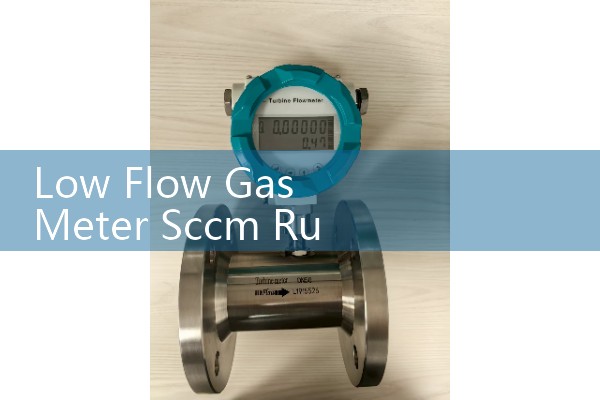
Low Flow Gas Meter SCCM Rules for Process Control
Quick Answer: SCCM (standard cubic centimeters per minute) defines gas flow at reference conditions, typically 0 °C and 1 atm. In process control, a thermal mass flow meter or a laminar differential pressure meter gives repeatable low flow data if you apply five non-negotiable rules: always reference inlet pressure and temperature, size the meter for actual maximum flow not safety margin, use clean dry gas, install with straight run and no condensate traps, and configure the 4-20 mA HART output to report mass flow directly. Most measurement drift we see on customer sites comes from ignoring the reference condition correction or letting moisture reach the sensor.
Why SCCM Rules Matter on the Plant Floor
Process engineers in chemical dosing, pharmaceutical coating, and semiconductor gas panels often work with flows below 10 SLPM. A typical MFC (mass flow controller) or a separate thermal flow meter may show 500 SCCM of nitrogen. The instrument does not measure volume. It measures heat loss across a heated sensor tube and converts that to a mass flow signal. The conversion depends on a fixed reference temperature and pressure set in the factory. If the actual gas temperature at the meter inlet is 35 °C instead of 0 °C, the same heat loss corresponds to a different molecular flow. The readout still shows 500 SCCM. The true mass flow differs by roughly 12 %. In custody transfer that error stays hidden until a batch quality check fails. For process control repeatability matters more than absolute accuracy. But repeatability also collapses if the reference conditions are not kept stable. This is not theory. We have seen a specialty gas blender in a Vietnam electronics factory produce off-spec mixtures for three days because the air conditioning vent blew cool air directly on the back of the thermal meter.
Rule 1: Lock the Inlet Pressure and Temperature
SCCM is a mass flow unit hidden inside a volumetric label. The label assumes the gas is at 0 °C and 1.013 bar(a). Your process line runs at maybe 2 barg and 25 °C. Every thermal meter has an internal lookup table or a live density correction using the gas species. It converts the measured sensor delta T to mass flow, then divides by the standard density of that gas to display SCCM. If you change inlet pressure from 2.0 barg to 2.3 barg, the displayed SCCM shifts even if the actual mass flow stays identical. The fix is simple. Use a precision pressure regulator upstream of the meter. In our coriolis mass flow meter installations for low flow gas we install a dome-loaded regulator with a 0.1 % droop and place a PT100 probe 10 pipe diameters upstream. The controller reads the actual pressure and temperature, then calculates true mass flow in g/h. For critical sparging processes a thermal mass flow meter with built-in pressure compensation works better. Tell your supplier the gas name, operating pressure, and temperature range up front. We had a customer in a Saudi petrochemical lab who ordered a meter calibrated for nitrogen at 1 atm but ran it on argon at 2.5 bar. The reading was off by 28 %. Simple paperwork mismatch, expensive offline time.
Rule 2: Pick the Full Scale Based on Process Flow, Not Pipe Diameter
Low flow gas meters are available from 0-10 SCCM up to 0-50 SLPM. Engineers sometimes select a meter with a 0-20 SLPM range for a process that normally runs at 1 SLPM. The turndown ratio of a quality thermal meter is 100:1, so specs suggest it can measure 1 SLPM. In practice, at the lower 5 % of the range the signal-to-noise ratio drops. The 4-20 mA output resolution becomes coarse. A 0-20 SLPM meter may only resolve 0.1 SLPM steps. On a 1 SLPM target, that is 10 % uncertainty in the control loop. Instead, specify the full scale at 120 % of your maximum real operating flow. For a bioreactor air overlay that peaks at 300 SCCM, order a 0-500 SCCM device. For a purge gas line running 50 SCCM, use a 0-100 SCCM device. Thermal mass flow meters for very low flows use a small bore sensor tube, often with a 0.8 mm internal diameter, to keep the flow velocity in the laminar range. When you oversize the meter, the bypass ratio shifts and the calibration curve flattens at the bottom. We also recommend inline coriolis mass flow meters for gases like ethylene oxide where density changes with pressure. A Coriolis meter directly outputs mass in kg/h, independent of the SCCM convention. If your control system expects an SCCM signal, the transmitter can scale the output accordingly. Always confirm the output scaling during FAT.
Rule 3: Control Gas Cleanliness and Dew Point
Sensor fouling is the number one reason for SCCM drift on low flow meters. A laminar flow element used in differential pressure SCCM meters has very fine rectangular channels. A 5 micron particle can obstruct 10 % of a single channel. The total pressure drop changes, and the flow reading shifts. Thermal sensor tubes are even more sensitive. A tiny oil mist layer changes the heat transfer coefficient. The meter will read low. For semiconductor-grade nitrogen at 99.999 % purity,
Rule 4: Install with Short, Straight, Vibration-Free Pipe
Low flow measurements need undisturbed flow profiles. For a thermal meter with a bypass MFC, the manufacturer usually recommends 10D upstream and 5D downstream straight run. In a control panel this space is rarely available. If you must install the meter right after a needle valve or a check valve, use a flow conditioner. A simple bundle of small tubes inside the pipe works. More important is mechanical vibration. A metering pump running at 50 Hz can induce noise in the sensor signal. The 4-20 mA output at 100 SCCM may show a 2 SCCM peak-to-peak oscillation. The control valve then hunts. Mount the meter on a separate bracket, not directly on the pump skid. Use flexible hoses with an ID larger than the meter inlet to avoid additional pressure drop. For small tube connections of 1/4 inch or 6 mm Swagelok, the weight of a large-bore cable can tilt the fitting and create stress. That stress changes the sensor alignment in a Coriolis meter and shifts the zero point. Always zero the meter under process pressure, with the isolation valves closed. We have seen zero shifts of 0.5 SCCM in a coriolis mass flow meter simply from tightening the mounting bolts on a table that was not level.
Rule 5: Output the Right Signal to the PLC or DCS
The 4-20 mA HART signal from a low flow meter can represent SCCM, mass flow in g/h, or an arbitrary custom unit. Most DCS engineers prefer mass flow in kg/h for totalizing and control. Convert it in the transmitter. A flow of 100 SCCM of nitrogen has a mass flow of roughly 0.125 g/min, or 7.5 g/h. If your process batch weighs ingredients in grams, asking operators to mentally convert SCCM to grams is unsafe. Configure the 4-20 mA span in percent, with 4 mA = 0 and 20 mA = the maximum mass flow rate in g/h. Use the HART digital signal for diagnostics. Read the sensor temperature, totalizer value, and alarm flags without disturbing the analog loop. For hazardous areas requiring ATEX Zone 1 or IECEx Zone 1, specify an intrinsically safe version with an Ex ia IIC T4 rating. The sensor power is limited so the maximum cable length from the barrier to the meter is often 300 m for a 0.75 mm² conductor. Exceed that and the voltage drop at 500 SCCM may cut off the 4-20 mA signal. We always test with a loop calibrator at both ends during commissioning. Do not skip this check.
FAQ: Low Flow Gas Meter SCCM Rules
Can I use a coriolis mass flow meter instead of a thermal meter for SCCM measurement?
Yes. A coriolis mass flow meter gives direct mass flow in g/h or kg/h and ignores pressure and temperature changes. You set the transmitter to output an SCCM-equivalent signal based on the gas standard density. The accuracy at very low flows is excellent, typically ±0.1 % of rate for a DN15 Coriolis sensor. The pressure drop is slightly higher than a thermal bypass meter, so check the maximum allowable pressure loss for your process.
What is the typical calibration gas and what happens if I change gas types?
Most low flow meters are calibrated on air or nitrogen. When you switch to argon, helium, or CO₂, the heat capacity difference means the raw sensor signal no longer matches the calibration curve. A conversion factor is applied in the transmitter. Modern devices store multiple gas curves. If the gas mixture is variable, specify a multi-gas calibration with a stated composition range. Without this the SCCM reading can be off by 20 % or more.
How often do SCCM meters need recalibration?
In clean gas service, every 12 to 18 months. In applications with trace oil or particles, every 6 months. Recalibrate at three points across the range using a NIST-traceable molbloc or piston prover. If the meter shows a zero drift of more than 0.5 % of full scale, clean the sensor and recalibrate immediately. Many labs send the meter back to Silver Instruments with as-found and as-left data for ISO 9001 records.
Does the orientation of the meter affect the SCCM reading?
For thermal meters, horizontal installation is standard. A vertical orientation with flow upwards is acceptable if the gas is clean. A downward flow orientation is not recommended because any liquid slug will fall directly into the sensor. Coriolis meters can be mounted in any orientation, but always re-zero the meter in the final mounting position under process pressure.
We need a meter for a helium leak te『SILVER Official Website SERVICE』
 Hot Blog
 Related AD