

『Flow Meter Display Mounts: Choosing Integral vs Remote Transmitters for Harsh Areas』Related information(v cone flow meter|rotary gas meter|gallon meter|gear meter|metal tube rotameter|glass tube rotameter|nutating disk meter|transit time ultrasonic flow meter|wedge flow meter|pd meters|hydraulic flow meter|ultrasonic water flow meter|water flow meter|air flow meter|magnetic water flow meter|oxygen flow meter|gas flow meter|argon flow meter|air velocity meter|gasoline flow meter|fuel flow meter|ultrasonic water meter|digital water meter|nitrogen flow meter|solid flow meter|Oxygen tank flow meter|digital water flow meter|diesel fuel flow meter|steam flow meter|02 flow meter|compressed air flow meter|oil flow meter|liquid flow meter)
Flow Meter Display Mounts: Choosing Integral vs Remote Transmitters for Harsh Areas
For flow meter display mounts in harsh areas, remote transmitters usually work better when heat, vibration, moisture, or poor access are present. Integral transmitters cost less and suit clean, accessible installations. Send us your pipe size (DN), fluid type, pressure (bar), temperature (°C), and flow range to get a clear recommendation from Silver Instruments.
Integral Mounts vs Remote Transmitters: The Real Difference
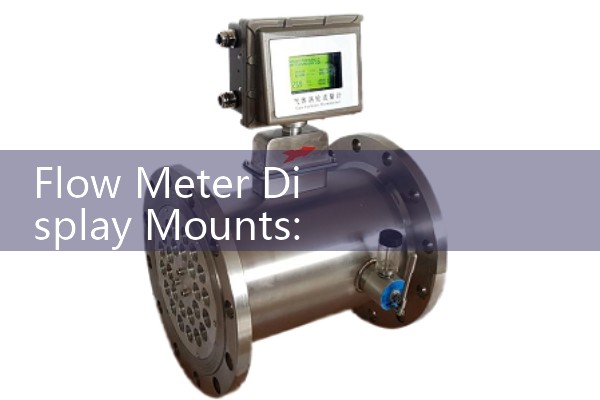
An integral transmitter sits directly on the flow sensor. One housing contains the converter, display, and output terminals. The compact design reduces cable glands, junction boxes, and installation time. A remote transmitter mounts on a wall, pipe stand, or panel. A shielded cable carries the sensor signal to the remote electronics. That cable is the main extra cost and installation point. The display can sit at eye level even if the sensor is buried in a pit or mounted on a tall pipe rack.
Harsh Area Factors That Push You to Remote Mount
Heat is the first trigger. Many flow sensors handle process temperatures above 150 °C. The electronics inside an integral transmitter cannot survive that heat for long. We have seen this on customer sites many times. A chemical plant in Malaysia ran thermal oil at 180 °C through a Coriolis mass flow meter. The integral transmitter failed within six months. They replaced it with a remote transmitter mounted on a shaded wall. The sensor stayed in the hot line, and the electronics ran at 35 °C ambient.
Vibration is another common problem. Pump skids and offshore platforms create steady vibration. Integral transmitters attached to a vibrating sensor body develop solder cracks and display faults. Remote transmitters installed on a separate panel survive longer. A mining customer in Western Australia uses remote vortex flow meters on a vibrating pipe rack. The sensor takes the vibration. The transmitter sits on a concrete wall 20 m away.
Moisture ruins electronics faster than most people expect. An electromagnetic flow meter sensor can be IP68 and survive submersion. The integral transmitter may have IP67, but prolonged flooding still gets past seals. Water authorities in Southeast Asia often use remote transmitters in underground pits because monsoon floods reach 1 m in some pump stations. The transmitter is mounted above flood level.
Access problems are often ignored until startup. A DN300 meter on a pipe at 6 m height has an integral display but nobody can read it. Remote mount solves this immediately. A dairy plant in New Zealand uses remote transmitters for electromagnetic flow meters on overhead process lines. Operators read flow totals at floor level.
In hazardous areas, remote mount sometimes reduces project cost. You can keep the sensor in ATEX Zone 1 and put the transmitter in a safe area. The sensor may need an intrinsically safe or flameproof design, but the remote transmitter does not need an expensive Ex d housing if it is not in the classified area. This matters a lot in solvent handling and oil and gas terminals.
When Integral Mount Is Still a Good Choice
Integral mount is not weak. It is often the right choice for clean process rooms, water treatment skids, and small pipe sizes from DN15 to DN100. If the meter is at eye level, ambient temperature stays between minus 20 °C and 60 °C, and vibration is low, an integral transmitter lowers cost and simplifies wiring. The output cable goes straight to the PLC or flow totalizer. No extra sensor cable exists. For many OEM skid builders, integral is the default. They build a compact skid, test it in the shop, and ship it.
Electromagnetic Flow Meter Specifics
Electromagnetic flow meters measure millivolt signals from electrodes. Remote cable length depends on fluid conductivity. For water with conductivity above 200 µS/cm, you can run 30 m or 50 m of shielded signal cable. For low conductivity fluids below 20 µS/cm, keep the cable under 10 m. Otherwise noise enters the signal. A customer in Indonesia asked us about a demineralized water line with 5 µS/cm conductivity. We recommended an integral transmitter to keep the electrode cable as short as possible. Remote was not worth
Coriolis and Vortex Meter Specifics
Coriolis mass flow meters also allow remote transmitters. The sensor and transmitter are matched at the factory. Do not swap transmitters between sensors. Cable length is usually limited to 10 m or 30 m depending on the sensor model. Many Coriolis transmitters also accept a PT100 input for density compensation. Vortex flow meters with remote transmitters work well on steam and gas lines where pipe heat and vibration occur. A palm oil refinery in Malaysia uses remote Coriolis transmitters on hot oil mass balance lines. The local temperature near the pipe is 70 °C, but the remote transmitters sit in an air conditioned rack room.
Installation and Cost Trade Offs
Integral saves the cost of a sensor cable, a cable gland, a mounting bracket, and a second enclosure. You still need a display cover and local push buttons. Remote adds 10 m to 30 m of shielded cable, a junction box on the sensor, a wall bracket, and extra labor. But remote saves money in the long run when it prevents failures or because the display is easy to read. Most engineers skip this part. They compare initial purchase price only. In practice, remote mount is cheaper over five years in harsh areas because you avoid early electronic failure and production downtime.
How to Specify the Right Mount
Give your supplier these details: pipe size (DN), fluid type, conductivity for electromagnetic meters, pressure (bar), temperature (°C), flow range, ambient temperature, vibration level, installation location, and hazardous area classification. Include the output signal you need such as 4-20 mA HART, pulse, or Modbus RTU. A clear spec gets a fast quote. If the meter goes into a buried pit or a pipe rack above 2 m, choose remote. If the process is hot, vibrating, or washdown heavy, choose remote. If the meter is on a bench or a compact skid at eye level, choose integral.
Why Work with Silver Instruments
Silver Instruments supplies electromagnetic, Coriolis, ultrasonic, vortex, oval gear, thermal mass, and differential pressure flow meters. We build both integral and remote transmitter versions for most models. Our engineers help you pick the right display mount for harsh areas. We ship to Southeast Asia, Oceania, Latin America, Africa, and the Middle East. You get wiring diagrams, dimensional drawings, and calibration certificates before dispatch.
Send us your pressure (bar), temperature (°C), pipe size (DN), flow range, and installation site details. We will recommend an integral or remote transmitter and provide a price. Tel: +86-25-68650347, Whatsapp: +86-25-52155837, WeChat: +86 15365082610. You can also visit flow-meter.com.au.
FAQ: Five Key Questions on Flow Meter Display Mounts
Q1: What is the main difference between integral and remote transmitters?
Answer: Integral mounts on the sensor body. Remote mounts on a wall or pipe stand. A shielded cable connects the sensor to the remote transmitter.
Q2: When should I choose a remote transmitter for an electromagnetic flow meter?
Answer: Choose remote when the sensor is in a buried pit, high on a pipe rack, near hot fluid above 120 °C, or in a flood zone. Remote also helps when local display access is poor.
Q3: Does remote mounting affect flow measurement accuracy?
Answer: No. The signal cable is matched to the sensor and transmitter. Keep the cable length within the factory limit and use shielded cable. For low conductivity fluids below 20 µS/cm, keep the cable under 10 m.
Q4: What cable length is allowed between flow sensor and remote transmitter?
Answer: Electromagnetic meters often allow 10 m to 30 m for water with conductivity above 200 µS/cm. Coriolis meters usually allow 10 m to 30 m. Longer runs need a remote amplifier or signal conditioner. Always check the specific model.
Q5: How do I specify hazardous area certification for a remote transmitter?
Answer: State the zone and gas group. For example, ATEX Zone 1 or Zone 2, IECEx, or NEC class and division. Tell us the sensor location and the transmitter location. Silver Instruments can match the correct Ex rating without over specifying.
 Hot Blog
 Related AD