

『Flow Meter Esp32 Programming: Interfacing Pulse Sensors for IoT Water Monitoring Projects』Related information(v cone flow meter|rotary gas meter|gallon meter|gear meter|metal tube rotameter|glass tube rotameter|nutating disk meter|transit time ultrasonic flow meter|wedge flow meter|pd meters|hydraulic flow meter|ultrasonic water flow meter|water flow meter|air flow meter|magnetic water flow meter|oxygen flow meter|gas flow meter|argon flow meter|air velocity meter|gasoline flow meter|fuel flow meter|ultrasonic water meter|digital water meter|nitrogen flow meter|solid flow meter|Oxygen tank flow meter|digital water flow meter|diesel fuel flow meter|steam flow meter|02 flow meter|compressed air flow meter|oil flow meter|liquid flow meter)

Flow Meter ESP32 Programming: Interfacing Pulse Sensors for IoT Water Monitoring Projects
Quick Answer: You can interface a pulse output flow meter with an ESP32 using one GPIO pin and a simple interrupt counter. For most water monitoring IoT projects, choose a flow meter with a 5 V or open collector pulse output and add an optocoupler if the cable run exceeds 5 meters. Silver Automation Instruments supplies electromagnetic and turbine flow meters with pulse outputs that connect to ESP32 boards without complex signal converters.
Why Pulse Output Flow Meters Fit ESP32 IoT Projects
Pulse output flow meters are practical for ESP32 data loggers because the signal is just a square wave. The ESP32 counts pulses without needing a 4-20 mA input card. In an industrial water line, a flow meter with a pulse output and a 4-20 mA HART output gives you two signals for the same flow rate. One pulse count goes to the ESP32 for cloud logging. The 4-20 mA signal goes to a PLC for local control.
We see this setup often in Vietnam, Thailand, and the Philippines. A water utility installs a DN100 electromagnetic flow meter with pulse output. An ESP32 board counts pulses and sends totalized volume to a cloud dashboard every 5 minutes. The same meter sends 4-20 mA to a local pump controller. This is a low cost way to add IoT monitoring to an existing plant.
Hardware You Need for a Reliable Pulse Interface
Here is the thing. Most pulse flow meters in water service output a square wave at 5 V or 24 V. The ESP32 GPIO pins tolerate 3.3 V only. So you need a level shifter or an optocoupler module. A 2 channel optocoupler board with a PC817 works fine for cable runs under 50 meters. For longer runs, add a shielded twisted pair cable and a 10 kOhm pull-up resistor to 3.3 V on the ESP32 side.
You also need a stable power supply. Use a 5 V 2 A DC adapter for the ESP32 and a separate 24 V DC supply for the flow meter if required. The ground of the flow meter and the ground of the ESP32 must be common. Do not skip the common ground because floating pulse signals cause random counts.
Most engineers skip this part. They connect a 24 V pulse signal directly to the ESP32 and damage the pin. We have seen this on customer sites in Vietnam and Saudi Arabia. A 10 dollar optocoupler board prevents a 400 dollar flow meter repair.
Wiring a Pulse Flow Meter to ESP32
For a typical Silver Instruments electromagnetic flow meter with pulse output, connect the pulse positive wire to the optocoupler input. Connect the pulse negative wire to the optocoupler ground. On the output side, connect the collector to GPIO 23 and the emitter to GND. The ESP32 internal pull-up is enough for short test benches, but a 4.7 kOhm external resistor from GPIO 23 to 3.3 V gives cleaner edges.
In practice, we recommend GPIO 23 for pulse counting because it does not collide with UART0 or the boot strapping pins. Pin 34, 35, 36, and 39 are input only but they have no internal pull-up. So avoid those pins for pulse counting. Use GPIO 23, 19, 18, or 5.
Wire the flow meter shield to the same ground as the ESP32. If the flow meter is in a metal panel, bond the shield at one end only to reduce ground loops. This detail matters in pump stations where variable frequency drives create electrical noise.
Basic ESP32 Code for Pulse Counting
The ESP32 code uses an interrupt on the falling edge. Define a volatile unsigned long pulseCount variable. In the interrupt service routine, increment pulseCount. Then in the loop, read the count every second and calculate flow rate. Here is the basic logic.
Because Arduino functions are simple, most water utility integrators use the Arduino IDE with the ESP32 board package. Set flash frequency to 80 MHz. Enable the pull-up resistor in code with pinMode(pin, INPUT_PULLUP) if you do not use an external resistor. Attach the interrupt with attachInterrupt(digitalPinToInterrupt(pin), countPulse, FALLING).
A full code sample would include debounce logic. But a hardware RC filter with 100 nF capacitor and 1 kOhm resistor works better for water flow pulses below 500 Hz. In software, ignore pulses that arrive less than 2 milliseconds apart. This prevents false counts from relay contact bounce or pump start transients.
Filtering False Pulses in Water Systems
Here is the thing. Water flow pulses are not always clean. Air bubbles, pipe vibration, and pump pressure spikes create extra edges. A turbine flow meter near a pump can produce 10 to 20 false pulses per minute if no filter is fitted. That error adds up to several hundred liters per day in a 100 mm pipe.
Use a Schmitt trigger buffer after the optocoupler if the pulse edge rise time exceeds 1 microsecond. A 74HC14 chip cleans the edge. For electromagnetic flow meters, the pulse output is usually a solid square wave at 0 to 5 V. But still place a
We have seen a water utility in the Philippines log 4 percent extra volume because an unshielded cable ran next to a 3 phase pump cable. After moving the pulse cable to a separate conduit and adding a ferrite bead, the error dropped to 0.2 percent. The ESP32 code did not change.
From Pulse Count to Flow Rate and Total Volume
Each flow meter has a K factor. For a pulse output electromagnetic flow meter, the K factor may be 0.1 liter per pulse or 10 liters per pulse depending on pipe size. For a turbine flow meter, the K factor can be 120 pulses per liter for DN20. Check the calibration certificate that ships with the meter.
Flow rate in liters per second equals pulses counted in one second divided by pulses per liter. Total volume equals total pulse count divided by pulses per liter. For example, a DN50 electromagnetic flow meter with 1 liter per pulse sends 60 pulses in one minute. That means 60 liters per minute or 3.6 cubic meters per hour.
Store the K factor in an EEPROM or a cloud variable. Do not hardcode the K factor deep inside the firmware if the meter is changed. We have seen a food plant in Indonesia replace a DN25 meter with a DN40 meter and forget to update the K factor. The batch volume error reached 8 percent before the shift supervisor noticed.
Calibration and Field Checks
Field calibration is simpler than most people expect. Fill a known volume bucket or tank. Start the ESP32 counter. Stop the counter after the tank level reaches a marked line. Compare the logged pulses to the expected volume. If the error is more than 1 percent, adjust the K factor in software.
For larger pipes above DN100, use a portable ultrasonic flow meter as a reference. Install the reference meter 10 pipe diameters downstream from the permanent meter. Run the pump at three flow rates. Check the pulse output linearity. Silver Instruments electromagnetic flow meters typically hold 0.5 percent accuracy from 0.3 to 10 m/s flow velocity.
A desalination plant in Oman monitored 12 water lines with ESP32 boards and pulse output flow meters. They sent totalized volume to a central SCADA every 5 minutes over WiFi. The pulse counting method worked for 18 months without a single board failure. The key was the optocoupler and a clean 24 V supply.
Recommended Silver Instruments Flow Meters for ESP32
For ESP32 IoT water projects, the Silver Automation Instruments electromagnetic flow meter with pulse output fits most industrial water lines from DN15 to DN300. It has an open collector pulse output, a 4-20 mA HART output, and an optional RS485 Modbus channel. The flow sensor liner is PTFE or hard rubber for drinking water or wastewater.
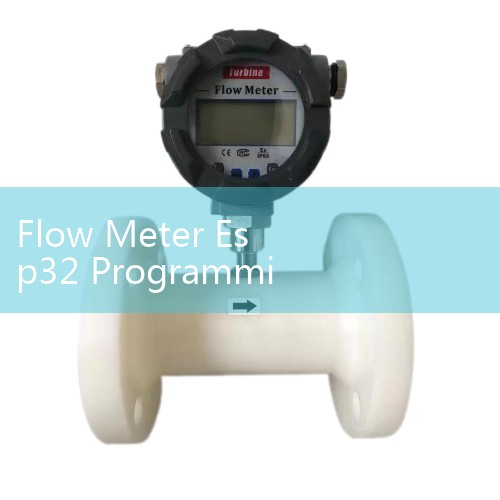
Turbine flow meters work well for clean water and low flow rates. A DN15 turbine meter from Silver Instruments with a 5 V pulse output can measure from 0.05 to 0.5 liters per second. Pair it with a PT100 temperature sensor if you need temperature compensated readings.
For brine or seawater, choose an electromagnetic flow meter with a titanium electrode and a PTFE liner. This is the right choice for a desalination plant or a saltwater cooling loop. The pulse output is isolated and connects to an ESP32 with the same wiring we described above.
Contact Silver Automation Instruments for a quote. Send us your pressure (bar), temperature (°C), pipe size (DN), and flow range. Our engineers will recommend the right flow meter and pulse output configuration for your ESP32 project.
Tel: +86-25-68650347
Whatsapp: +86-25-52155837
WeChat: +86 15365082610
Website: flow-meter.com.au
FAQ
1. Can an ESP32 read a flow meter pulse signal directly?
Only if the pulse signal is 3.3 V. Most industrial flow meters output 5 V or 24 V pulses. Use an optocoupler or level shifter to protect the GPIO pin.
2. What is the best ESP32 GPIO pin for pulse counting?
Use GPIO 23, 19, 18, or 5. Avoid input only pins 34 to 39 because they have no internal pull-up. Avoid boot strapping pins like GPIO 0 and GPIO 2.
3. How do I convert pulses to flow rate?
Divide the pulses counted per second by the meter K factor in pulses per liter. For example, 30 pulses in one second with a K factor of 3 pulses per liter gives 10 liters per second.
4. Why does my ESP32 count extra pulses near a pump?
Electrical noise from pump cables or VFD drives creates false edges. Use shielded cable, an optocoupler, a 100 nF capacitor, and a ferrite bead. Keep pulse cables at least 30 cm away from power cables.
5. Which flow meter works best for IoT water monitoring?
An electromagnetic flow meter with pulse output works best for raw water, drinking water, and wastewater from DN15 to DN300. For clean water with low flow, a turbine meter with 5 V pulse output is enough.
 Hot Product
 Related AD