

『Flow Meter Fire Fighting Tactics: Monitoring Water Line GPM for Perfect Foam Blending』Related information(v cone flow meter|rotary gas meter|gallon meter|gear meter|metal tube rotameter|glass tube rotameter|nutating disk meter|transit time ultrasonic flow meter|wedge flow meter|pd meters|hydraulic flow meter|ultrasonic water flow meter|water flow meter|air flow meter|magnetic water flow meter|oxygen flow meter|gas flow meter|argon flow meter|air velocity meter|gasoline flow meter|fuel flow meter|ultrasonic water meter|digital water meter|nitrogen flow meter|solid flow meter|Oxygen tank flow meter|digital water flow meter|diesel fuel flow meter|steam flow meter|02 flow meter|compressed air flow meter|oil flow meter|liquid flow meter)
Flow Meter Fire Fighting Tactics: Monitoring Water Line GPM for Perfect Foam Blending
Quick Answer
Measure the fire water line GPM before the foam proportioner. Silver Instruments recommends an electromagnetic flow meter on the water line and an oval gear or Coriolis flow meter on the foam concentrate line. This gives two live signals so the foam ratio stays at 1 percent, 3 percent, or 6 percent.
Water Line GPM Is the Base Signal
A fire water flow meter for foam proportioning is the base signal for every mixing decision. In a balanced pressure foam system, the foam concentrate flow follows the water flow. The water flow meter sends the primary signal. The foam concentrate meter sends the correction signal. The PLC compares both values and trims the foam pump speed. Without a reliable water line GPM signal, the foam ratio is only a guess.
Many engineers assume the fire pump curve is enough. But field conditions change. Pipe diameter, valve position, nozzle count, and pump wear all shift the real flow. A fire pump GPM flow meter reads the actual water flow in m3/h or GPM. That is why fire protection teams now install flow meters on test headers and main supplies.
Flow Meter Selection for Fire Water and Foam Concentrate
For fire water lines, an electromagnetic flow meter is the first choice. The water is usually clean or slightly brackish. The meter works if the water conductivity is above 5 µS/cm. Use a rubber or PTFE liner with 316L electrodes for fresh water. Use titanium electrodes for seawater or brackish water.
For foam concentrate, the flow is much lower. A 3 percent system on a 1000 GPM water line only needs 30 GPM of concentrate. That is a small line, often DN15 to DN40. Oval gear flow meters handle this low flow and the higher viscosity of foam concentrate. If the concentrate viscosity changes from 50 cP to 500 cP, a Coriolis mass flow meter gives direct mass flow and density.
Silver Instruments Recommended Configuration
A typical fire pump test header uses a DN150 flow meter. The water line runs at 10 bar and 25 °C. The pump flow range is 500 to 2500 GPM. Silver Instruments recommends a DN150 electromagnetic flow meter with PN16 flanges, 4 to 20 mA HART output, and a digital display. The analog signal goes to the fire protection panel or PLC. The pulse output can drive a remote totalizer.
Last year a fire protection contractor in Vietnam ordered a similar meter for a DN150 carbon steel header.
Installation Notes for Fire Lines
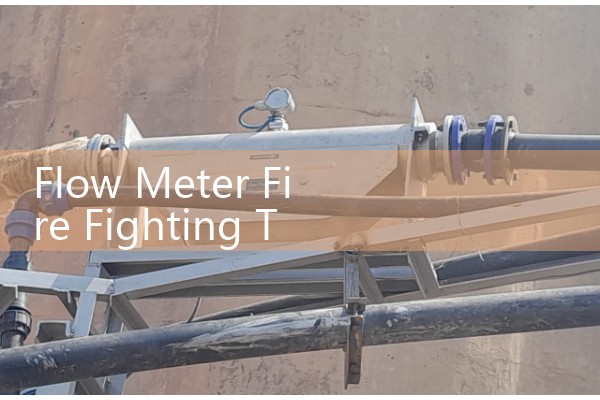
Straight run matters. For an electromagnetic flow meter, allow at least 5D upstream and 3D downstream. Do not install the meter at a high point where air can collect. Keep the pipe full at all times. Fire water lines often drain after a test. If the meter runs empty, the reading can jump. Use an empty pipe detection feature if the line is above ground.
Grounding is another common issue. In carbon steel pipes, use grounding rings or grounding electrodes. This removes electrical noise. In plastic pipes, use grounding rings on both sides. We have seen this on customer sites many times. Most engineers skip this part, but noise causes jumpy readings. On foam concentrate lines, install the oval gear meter on the discharge side of the foam pump. Place a 60 mesh strainer upstream.
FAQ
Which flow meter is best for fire water GPM monitoring?
An electromagnetic flow meter is best for the fire water line. It has no moving parts, no pressure drop, and handles DN15 to DN600 line sizes. For foam concentrate, use an oval gear or Coriolis meter.
What pipe size should the flow meter match?
Match the meter to the pipe inside diameter. Common fire water line sizes are DN80, DN100, DN150, DN200, and DN250. A full bore electromagnetic meter gives better low flow accuracy than an insertion meter.
Can Silver Instruments supply a flow meter for seawater fire water lines?
Yes. For seawater or brackish water, specify titanium electrodes and a PTFE or rubber liner. These materials resist corrosion and give stable readings.
What signal does a fire protection panel need from the flow meter?
Most fire protection panels accept a 4 to 20 mA analog signal, a pulse output for total flow, and HART for configuration. Silver Instruments configures these outputs before shipment.
How do I request a quote for a fire water flow meter?
Send us the fire water line size (DN), flow range in GPM or m3/h, pressure (bar), temperature (°C), and foam concentrate type. Contact Silver Automation Instruments on Tel: +86-25-68650347, Whatsapp: +86-25-52155837, or WeChat: +86 15365082610.
 Hot Product
 Related AD